class 11th accounts chapter 10 special purpose book cash book notes
In accounting, understanding cash books is essential for every student, especially those in class 11. This chapter covers various types of cash books, including single-column, double-column, and analytical petty cash books. Each type serves a unique purpose and offers different levels of detail.
For instance, a single-column cash book records only cash transactions, while a double-column cash book includes both cash and bank transactions. This makes it easier to track financial activities comprehensively.
class 11th accounts chapter 10 practical problems solutions
Understanding the format and structure of single-column cash books can greatly aid students in practical problems, making them more adept at handling real-life financial scenarios.
Consider the example of Raj’s transactions. Analyzing these will help students learn how to balance their cash books effectively.
class 11 accounts chapter 10 practical problems solutions ts grewal
Additionally, students should remember to document every transaction accurately to maintain the integrity of the cash book.
Single column or Simple Cash Book
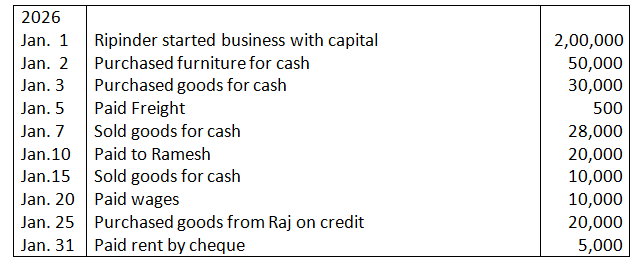
Q1. Enter the following transactions of Raj in his Single Column Cash Book and Balance it:
Working through practical problems will enhance students’ understanding of theoretical concepts, bridging the gap between theory and practice.
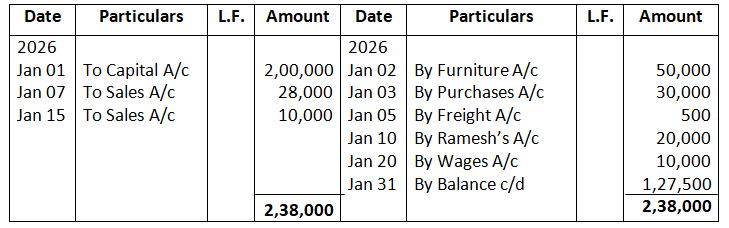
Solution – Single Column Book Transaction:
Each transaction must be recorded promptly and accurately to avoid discrepancies that could lead to financial mismanagement.
Dr Cash Book Cr
Furthermore, students should practice regularly with different scenarios to become proficient in managing cash books.
Learning about the various transactions that can occur, such as payments and receipts, will enable students to maintain accurate financial records.
Working Note – Only Cash transaction recorded in cash book so purchased goods from Raj on Credit is not recorded in cash book.
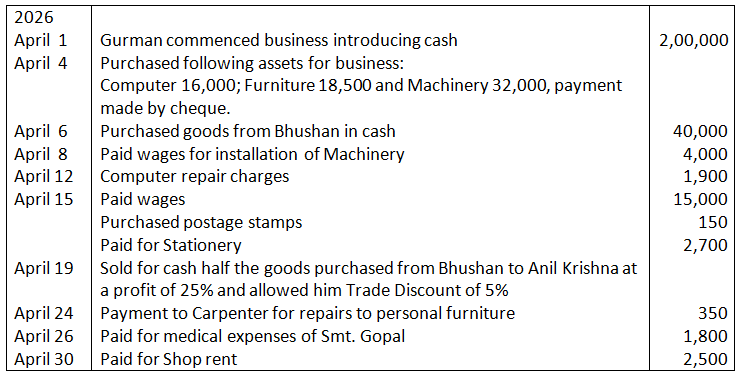
Q2. Prepare Simple Cash Book of Gopal from the Following transaction:
Solution – Simple Cash Book Transaction
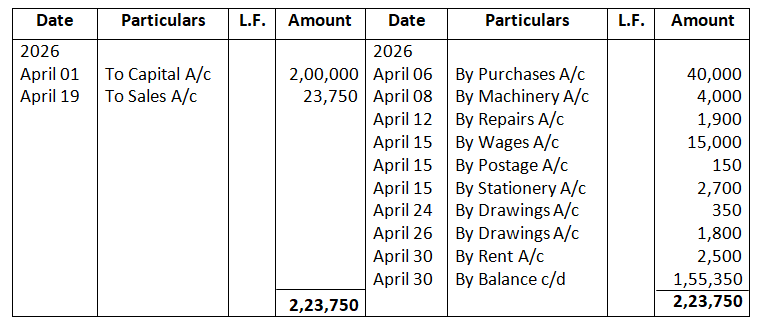
Dr Cash Book Cr
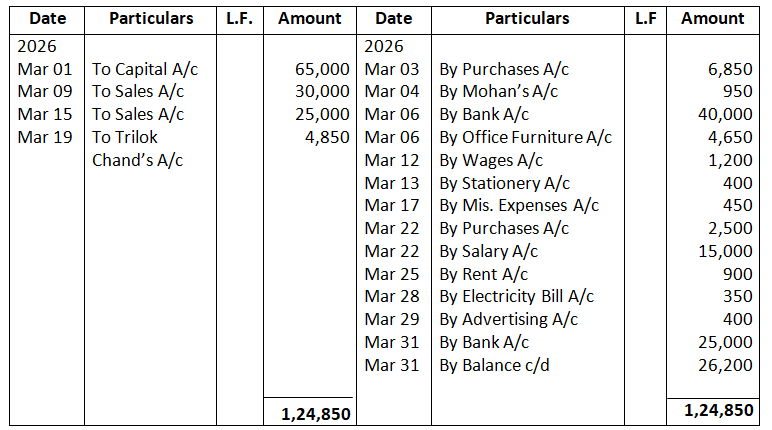
Simran’s transactions provide another valuable case study for students to engage with cash book practices.
Working Note:–
19 April – Goods purchased from Bhushan – 40,000
Sold Half Goods to Anil = 40,000 x ½ = 20,000
Profit of Selling = 20,000 x 25% = 5,000
The importance of ledger accounts will also be covered, emphasizing how cash book entries relate to ledger entries.
So Selling Price = 20,000 + 5,000 = 25,000
Selling Price after Discount = 25,000 – (25,000 x 5%)
= 25,000 – 1,250
= 23,750
Q3. Prepare Simple Cash Book from the following transactions of Simran:
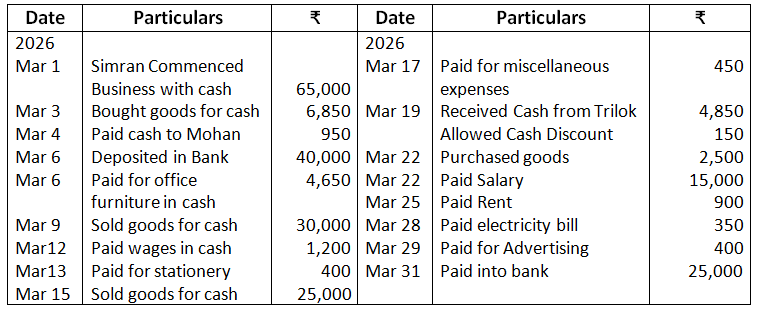
Solution – Simple Cash Book Transaction:
Dr Cash Book Cr
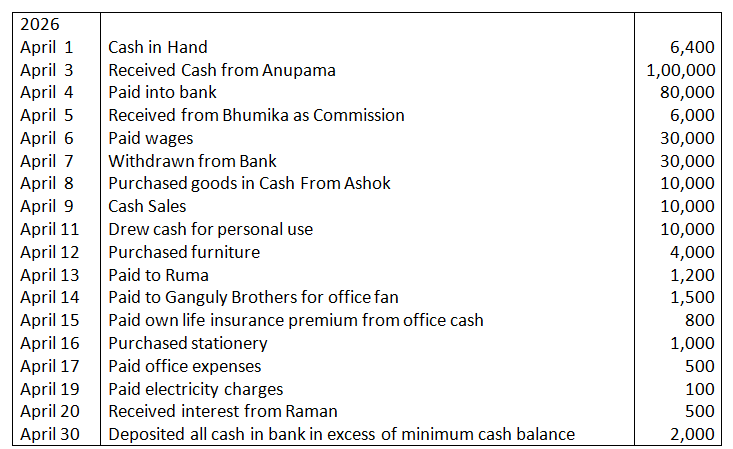
Q4. From the following prepare Single Column Cash Book of Suresh and Post them in Ledger Accounts:
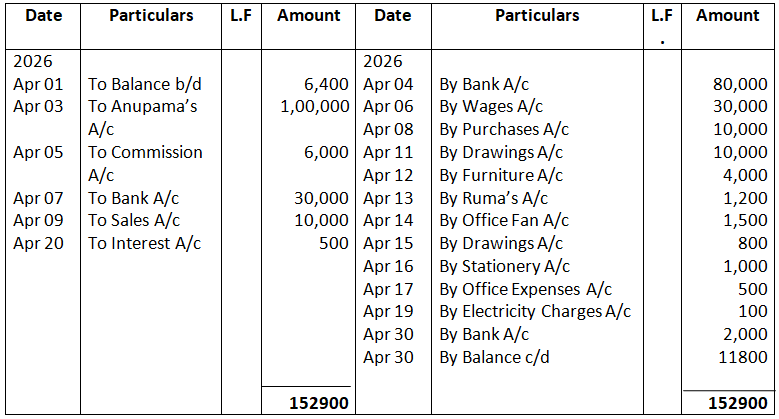
Solution – Single Column Cash Book:
Dr Cash Book Cr
Two-Column Cash Book
Q5. Record the following transactions in Double Column Cash Book and Balance the book on 31st March, 2026:
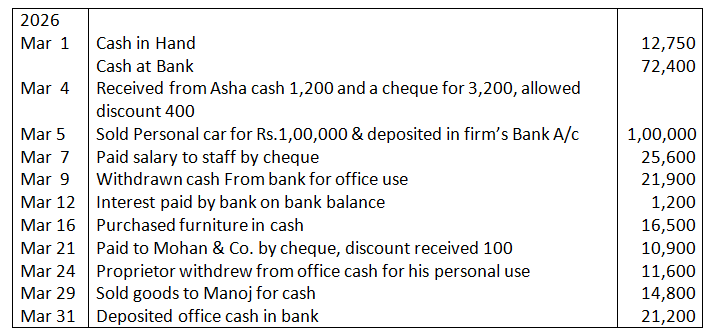
Solution – Double Column Cash Book Transaction:
Dr Cash Book Cr
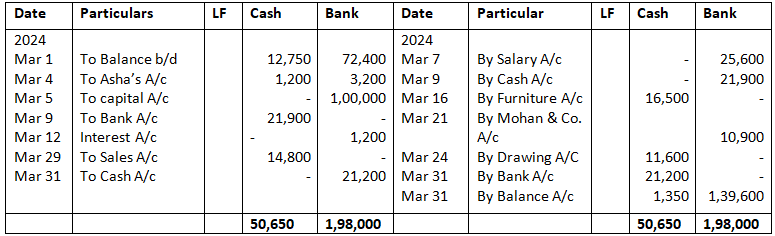
Working Note – Contra entries are the entries which affect both cash and bank, i.e., balance of one will decrease and the other will increase due to such transactions. Such transactions are recorded on both sides of the Cash Book, once in the cash column and once in the bank column.
Q6. Prepare Two-column Cash Book of Bimal, Lucknow from the following transactions:
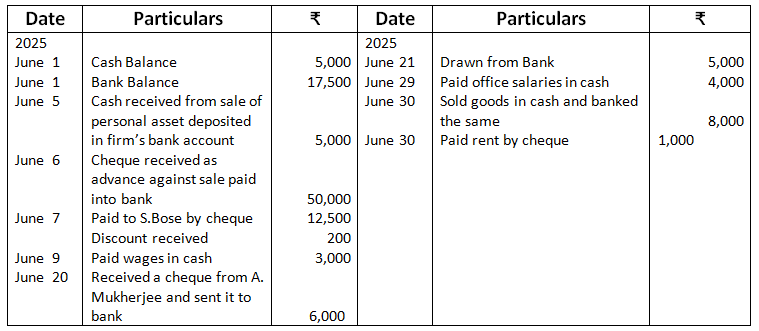
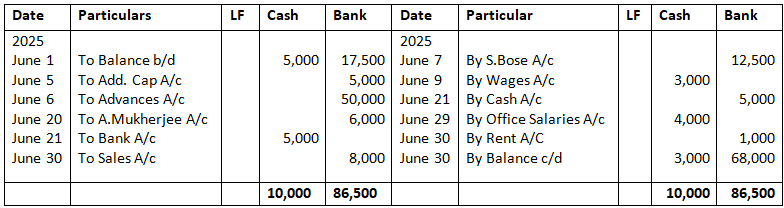
Solution – Two Column Cash Book Transaction:
Dr Cash Book Cr
Q7. Prepare Two-column Cash Book from the following transactions of Mani, Kochi:
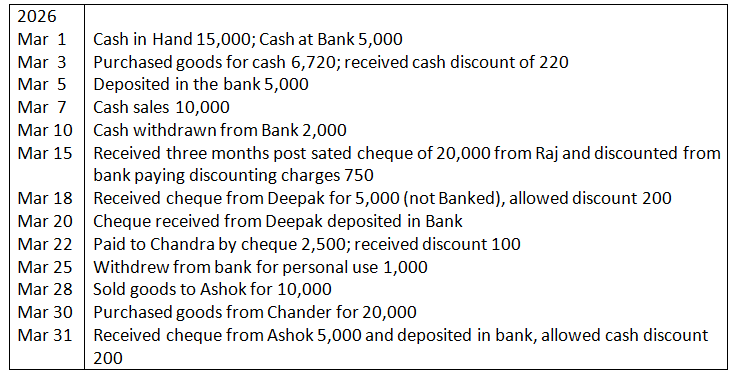
Solution – Two Column Cash Book Transaction:
Dr Cash Book Cr
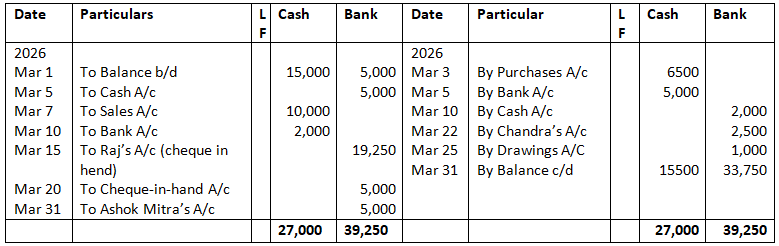
Working Note –
15 March – 20,000 – 750 = 19,250 (Bank A/c)
Q8. Prepare Two-column Cash Book of Vinod from the following transactions:
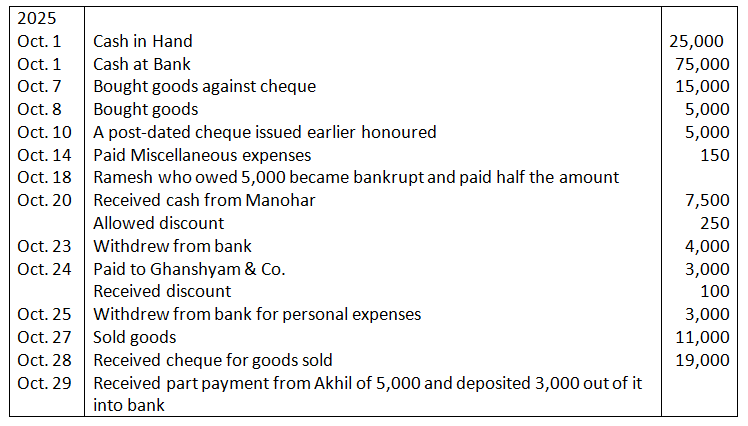
Solution – Two Column Cash Book Transaction:
Dr Cash Book Cr
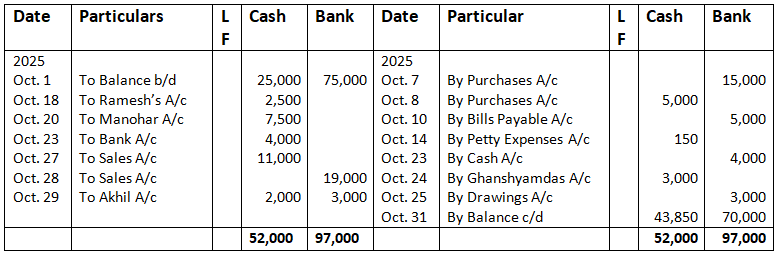
Q9. Enter the following transactions in Two-Column Cash Book of Reema, and find cash and bank balances:
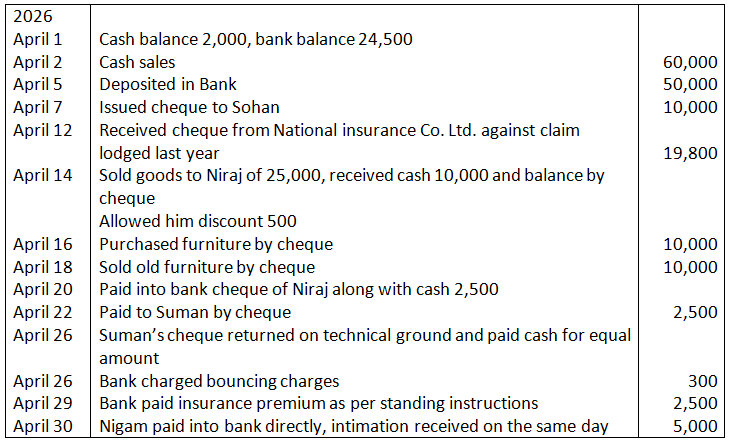
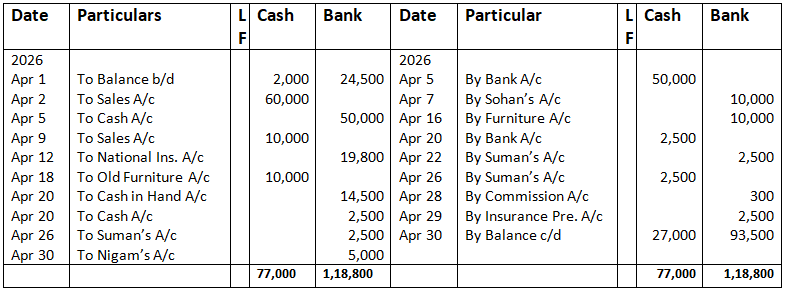
Solution – Two-Column Cash Book Transaction:
Dr Cash Book Cr
In conclusion, mastering the cash book and its applications is crucial for students pursuing accounting in class 11, especially when tackling chapter 10.
Q10. Write the following transactions in the Cash Book of Premium stores, Kolkata (Proprietor Amrit Kumar):
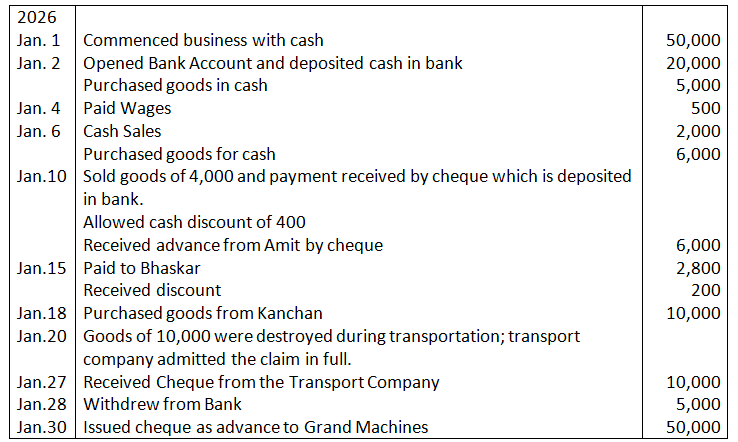
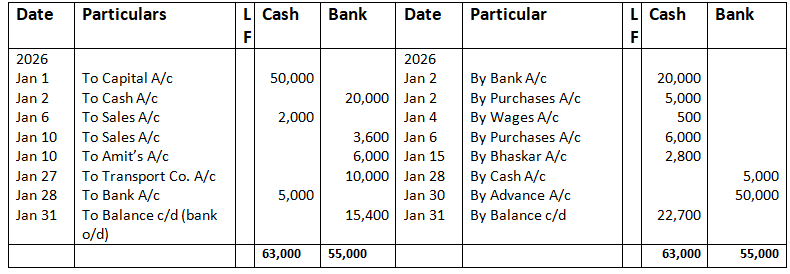
Solution – Two Column Cash Book Transaction:
Dr Cash Book Cr
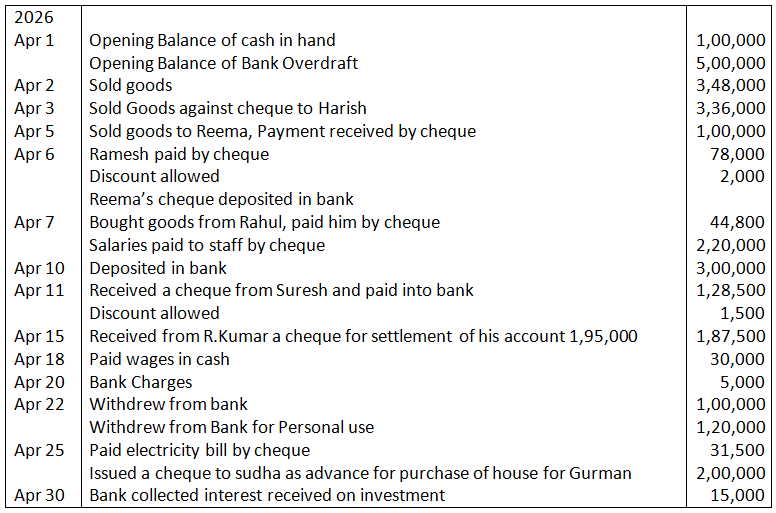
Q11. Enter the following transactions in Two-Column Cash Book of Gaurav, Delhi:
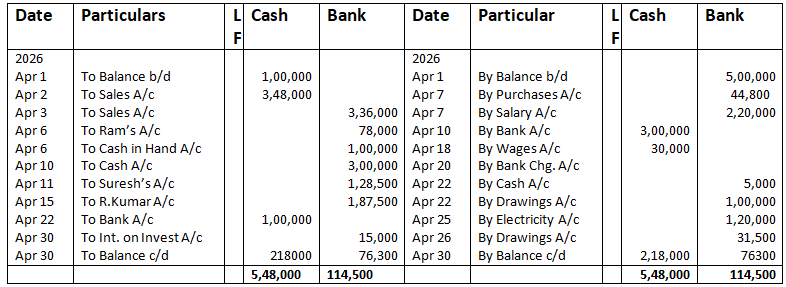
Solution – Two Column Cash Book Transactions:
Dr Cash Book Cr
Analytical Petty Cash Book
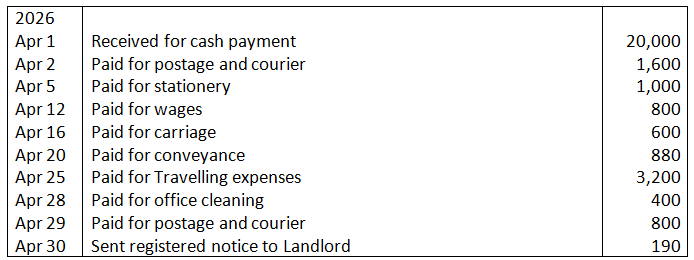
Q12. From the following information, prepare an Analytical Petty Cash Book:
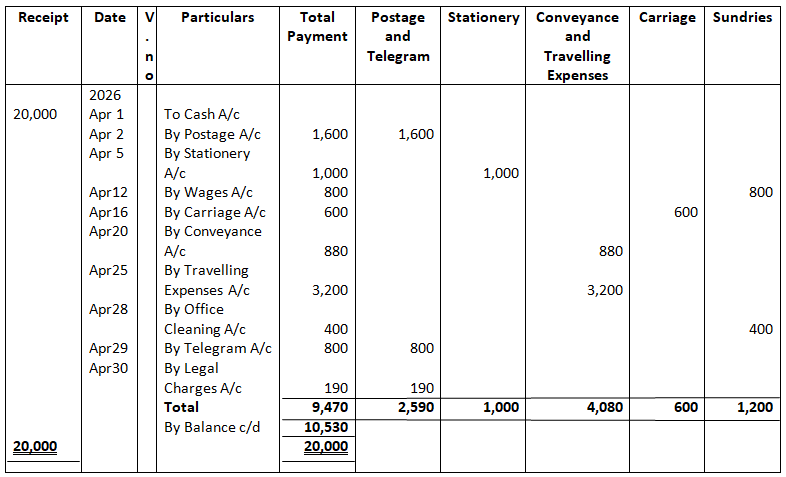
Solution – Analytical Petty Cash Book Transaction:
Dr Petty Cash Book Cr
By adhering to these practices, students will be well-prepared for their examinations and practical applications in the real world, reinforcing their understanding of the subject matter.
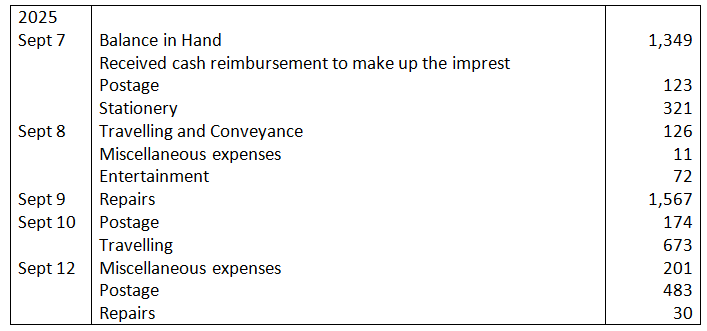
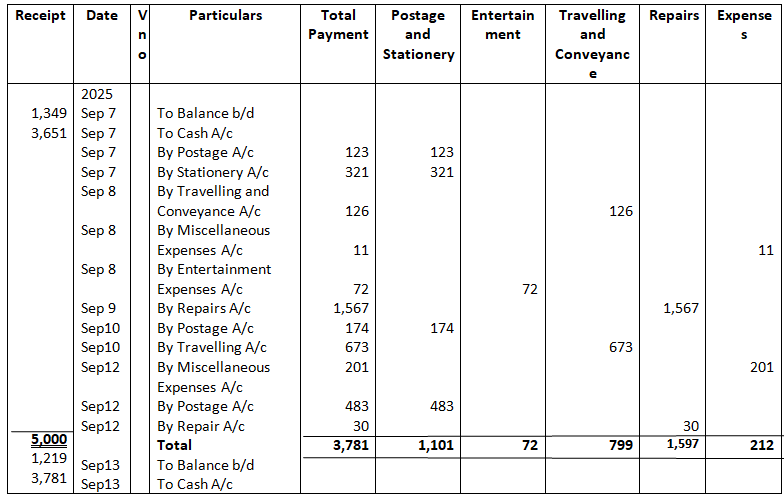
Q13. Rajan maintains a Columnar Petty Cash Book on the Imprest System. The Imprest amount is 5,000. From the following information, show how his Petty Cash Book would appear for the week ended 12th September, 2025:
Solution – Columnar Petty Cash Book Transaction:
Dr Petty Cash Book Cr
Q14. A Petty Cashier in a firm received 15,000 as the petty cash imprest on 4th Jun, 2024. During the week, his expenses were as follows:
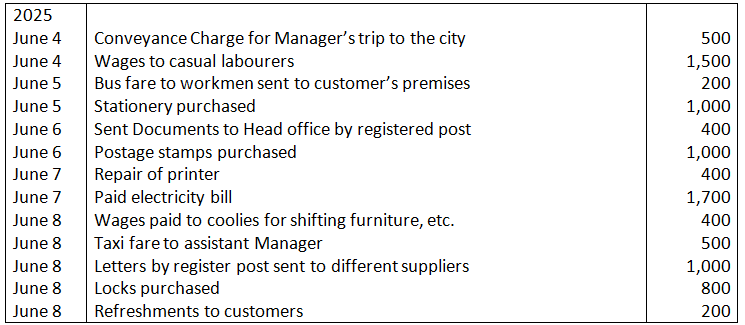
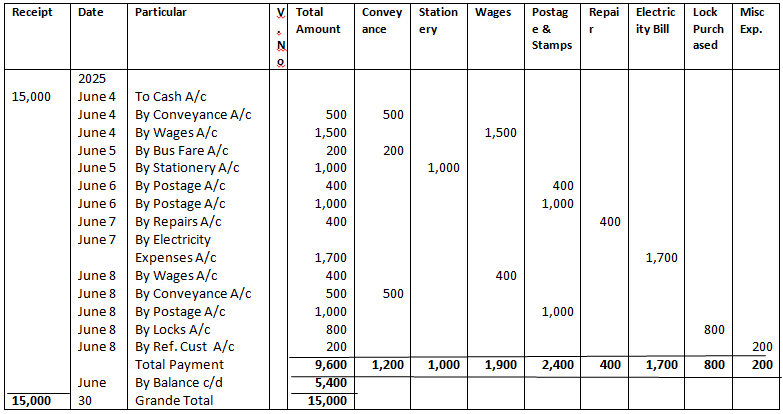
Write up the Analytical Petty Cash Book and draft the necessary Journal entries for the payments made.
Solution – Analytical Petty Cash Book Transaction:
chapter 10 special purpose book practical problems solutions ts grewal 2026 -27
NCERT Website